When we wash dishes, most of us think more foam means better cleaning—but that’s a common myth. Dish soap foam itself doesn’t actually clean; it’s the active ingredients in the dish soap that cut through grease and kill bacteria. Too much foam or too little foam can both mess up the cleaning process, leaving dishes greasy, sticky, or not fully sanitized. Understanding how dish soap foam works (and why it matters) is key to getting your dishes sparkling clean every time. Let’s break down the real relationship between dish soap foam and cleaning effect, so you can stop judging clean dishes by foam alone.
The Truth About Dish Soap Foam: It’s Not the Cleaner
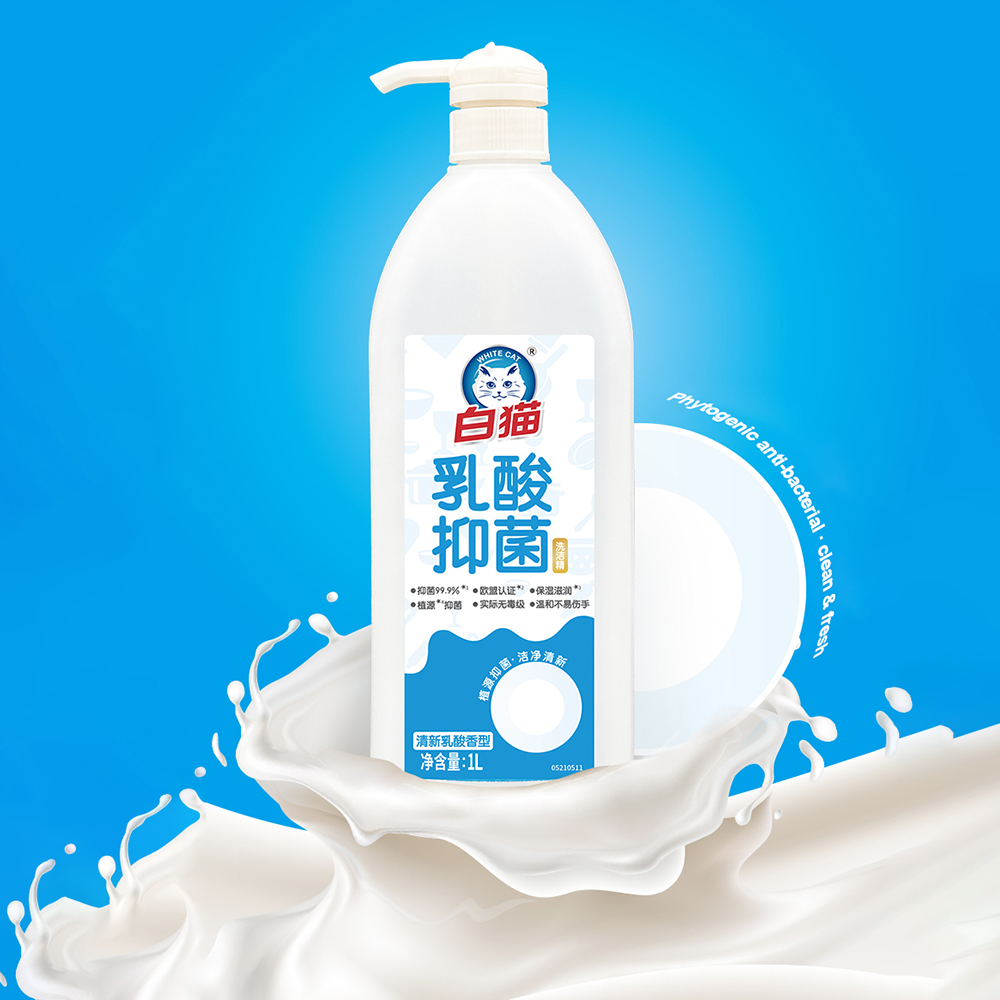
First, let’s get one thing straight: dish soap foam is just air trapped in water and soap molecules—it doesn’t have any cleaning power on its own. The real heroes are the active ingredients in the dish soap, like surfactants and enzymes. Surfactants work by breaking down grease and lifting dirt off dishes, while enzymes (in some dish soap, like WhiteCat’s Enzymatic Sterilization Laundry Liquid, which shares similar tech) break down food residues. Foam is just a byproduct of these ingredients mixing with water and air. For example, WhiteCat’s Dish Soap has 50% more active matter to cut through grease, but it doesn’t produce excessive foam—because the brand knows foam isn’t the point. So when you see lots of bubbles, it doesn’t mean the dish soap is working harder; it just means there’s extra soap mixed with air.
Too Much Foam: A Barrier to Effective Cleaning
Having too much foam from your dish soap can actually make cleaning harder, not easier. When there’s an overload of foam, it creates a thick layer that traps grease and food particles instead of rinsing them away. This means the active ingredients in the dish soap can’t reach the dish surface properly—they get stuck in the foam. You’ll end up scrubbing longer just to get through the bubbles, and even then, dishes might have a sticky residue. Too much foam also takes forever to rinse off, wasting water. For example, if you squeeze too much dish soap into a sink full of dishes, the foam will pile up, and you’ll spend twice as long rinsing each plate to get rid of the soap film. WhiteCat’s Dish Soap is designed to be low-foaming but high-efficiency—so you get clean dishes without the foam hassle. Overusing dish soap just leads to foam chaos, not better cleaning.
Too Little Foam: Is It a Problem?
You might worry that no foam means your dish soap isn’t working, but that’s rarely true. Many high-quality dish soap products are low-foaming by design, focusing on active ingredients instead of bubbles. If there’s too little foam, it could mean you’re using too little dish soap—but only if dishes still feel greasy after washing. For example, a tiny squirt of WhiteCat’s concentrated dish soap is enough for a small load of dishes, and it won’t produce much foam, but it still cuts through grease effectively. The only time too little foam is an issue is when the dish soap concentration is too low to break down heavy grease (like fried food oil). In that case, adding a bit more dish soap (not enough to create a mountain of foam) will boost the active ingredients, not the bubbles. Remember: foam amount doesn’t equal cleaning power—grease-free dishes do.
Water Hardness and Dish Soap Foam
Water hardness plays a big role in how much foam your dish soap produces, and this indirectly affects cleaning effect. Hard water has high mineral content, which reacts with dish soap to reduce foam—sometimes making it seem like the dish soap isn’t working. But the real problem is that minerals in hard water can bind with the active ingredients in dish soap, making them less effective at cutting grease. For example, if you have hard water, you might need a bit more dish soap to get the same cleaning result, but you still shouldn’t aim for lots of foam. WhiteCat’s Dish Soap is formulated to work well in both hard and soft water, with active ingredients that resist mineral buildup. So if you’re dealing with hard water, don’t keep adding dish soap to get more foam—instead, use the recommended amount and let the active ingredients do their job.
How to Get the Right Foam (and Best Cleaning Effect)
Now that you know foam isn’t the enemy or the hero, here’s how to use dish soap for optimal cleaning. First, follow the recommended amount on the dish soap bottle—WhiteCat’s instructions, for example, suggest a small squirt (about 1-2 tablespoons) for a sink full of dishes. This ensures enough active ingredients without excess foam. Second, use warm water—warm water helps the dish soap’s surfactants work better, cutting through grease faster without needing extra foam. Third, don’t overcrowd the sink—giving dishes space to move means the dish soap can reach all surfaces, instead of getting trapped in foam between crowded plates. Finally, rinse thoroughly but not excessively—too much rinsing wastes water, while too little leaves residue. By focusing on the right dish soap amount, water temperature, and rinsing, you’ll get dishes that are truly clean, not just foamy.

 EN
EN
 AR
AR CS
CS DA
DA NL
NL FR
FR DE
DE EL
EL HI
HI IT
IT JA
JA KO
KO NO
NO PL
PL PT
PT RO
RO RU
RU ES
ES SV
SV TL
TL ID
ID SR
SR UK
UK VI
VI HU
HU TH
TH TR
TR MS
MS GA
GA CY
CY HY
HY AZ
AZ KA
KA BN
BN LO
LO LA
LA MN
MN MY
MY KK
KK KY
KY