
 EN
 AR
 CS
 DA
 NL
 FR
 DE
 EL
 HI
 IT
 JA
 KO
 NO
 PL
 PT
 RO
 RU
 ES
 SV
 TL
 ID
 SR
 UK
 VI
 HU
 TH
 TR
 MS
 GA
 CY
 HY
 AZ
 KA
 BN
 LO
 LA
 MN
 MY
 KK
 KY
Why does washing detergent residue matter?
Washing detergent residue matters because it can change how clean clothes feel, look, and smell after a cycle. The phrase can mean different things: a pale mark on dark fabric, a stiff or waxy feel, lingering suds, or a fragrance that seems stronger than expected. Those signals are worth separating before blaming a washing detergent. Load size, dose, water conditions, dispenser use, and the rinse phase can all affect the result.
From a household-cleaning formulation perspective, washing detergent is only one part of the wash system. A useful first step is to describe what you notice and record the conditions around it. That makes the next wash more informative than simply adding less or switching products at random.
What counts as washing detergent residue?
Visible residue is the easiest signal to identify. It may look like white streaks, specks, or a cloudy film, especially on dark garments. But not every mark is unused washing detergent. Powder that did not dissolve, minerals in hard water, soil redeposition, fabric finish, or residue from another laundry additive can look similar. A single result is a clue, not a diagnosis.
Less visible concerns need the same care. A towel that feels less absorbent or a shirt that holds a noticeable scent may prompt questions about washing detergent, but fabric type, prior buildup, dryer products, and storage can also matter. In real laundry routines, it helps to ask: did this happen across several loads, with the same clothes, and under similar conditions?
Why washing detergent residue can be important
First, residue can affect the everyday feel and appearance of textiles. Marks on a black shirt or a scratchy finish on towels can make otherwise clean laundry less pleasant to use. More importantly, repeating the same conditions may allow the issue to continue from load to load, making it harder to tell whether the cause is the washing detergent, the machine, or the wash routine.
Second, a residue concern can be a useful signal that the rinse process deserves attention. Using more washing detergent does not automatically mean a better wash. When the amount is poorly matched to soil level, load size, washer type, or water conditions, the machine may have more material to distribute and rinse. Appliance guidance on rinse complaints commonly advises careful measuring and notes that a buildup situation can take more than one detergent-free rinse cycle to clear. Follow the appliance instructions and the washing detergent label for the relevant model and formula.
Third, the concern matters for people who are trying to simplify laundry choices around reactive or eczema-prone skin. A rash or persistent itch should not be assumed to come from washing detergent residue; many factors can be involved. However, dermatology guidance for avoiding common eczema triggers includes fragrance-free and dye-free laundry detergent as an option. That is a label-led choice, not a medical conclusion. If skin symptoms are ongoing, severe, or unclear, pause use of the suspected item and seek appropriate professional guidance.
Common conditions that can leave a residue-like result
- Too much washing detergent: A cap line is not automatically the right dose for every load. Check the label against soil level, washer type, and water guidance.
- An overloaded washer: When clothes cannot move freely, water and washing detergent may not circulate or rinse as intended.
- Incorrect dispenser use: Adding a washing detergent in a place or at a time not specified by the washer instructions can change how it dissolves and disperses.
- Cool-water or powder-use conditions: Some formulas and loads may need closer attention to label directions so material dissolves as intended.
- Rinse or machine-cleanliness issues: Repeated suds, a clogged dispenser, or washer buildup can complicate the picture and may call for the machine maker’s maintenance steps.
Notice that none of these signals proves that a particular washing detergent is defective. That distinction matters. The aim is to reduce guesswork by changing one relevant condition at a time and observing the next comparable load.
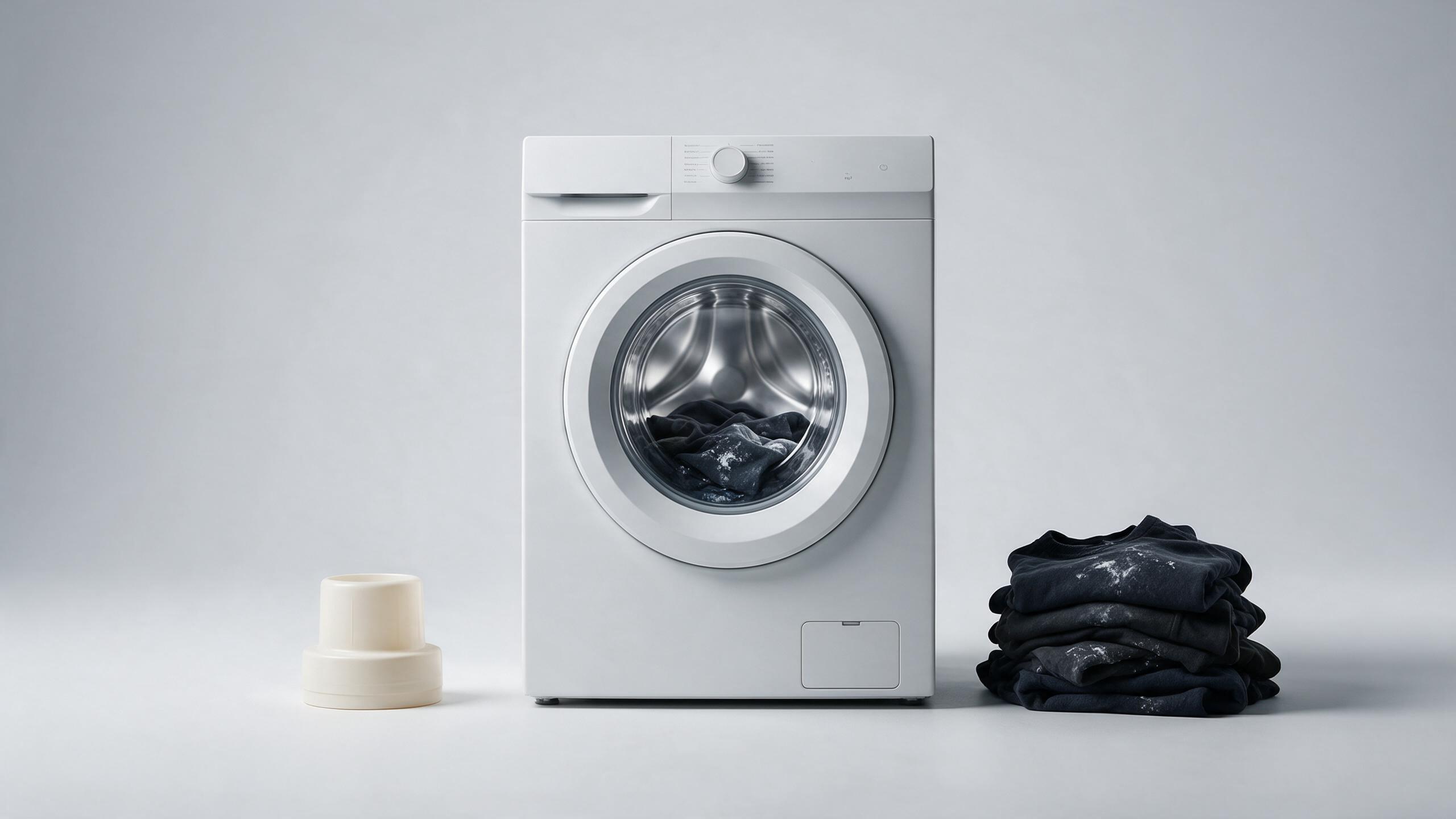
A practical washing detergent check sequence
- Describe the signal. Record whether you see spots, feel stiffness, notice suds, or have a scent concern. Take a photo of visible marks before rewashing.
- Read both labels. Check the washing detergent dose directions and the washer manual for load, dispenser, and rinse guidance. Use the stated measuring method rather than estimating.
- Review the load. Consider fabric mix, soil level, load size, and whether the drum had room for water movement. A lightly soiled small load may not need the same amount of washing detergent as a larger, dirtier one.
- Run a controlled follow-up. Where labels allow, use a comparable load with the measured dose and appropriate settings. If there is suspected buildup, follow the appliance guidance rather than improvising additives.
- Check the machine. Inspect the dispenser and follow the manufacturer’s cleaning and maintenance directions. If rinse problems recur, retain the wash details for customer support or service.
This sequence is deliberately modest. It does not promise a universal answer, because washing detergent performance depends on a system rather than one variable. A short record of product format, dose, water temperature, load type, and rinse setting gives you a clearer basis for a later conversation with the product supplier or appliance service team.
How to make a more informed washing detergent choice
Start with the information you can verify: the washing detergent label, your washer manual, and the needs of the fabrics you wash most often. For households concerned about fragrance or dyes, compare the actual label rather than relying on broad front-of-pack impressions. For powder or concentrated formats, look closely at dosage and dispensing instructions. If you are evaluating washing detergent for a business, sample documentation, batch identification, storage details, and agreed test conditions provide a more useful discussion than a single anecdote.
Shanghai Hutchison WhiteCat’s public site covers laundry supplies and household-cleaning topics. Its educational materials can help readers frame questions about labels, use conditions, and cleaning routines; specific product suitability still needs to be confirmed against current product information and the intended application.
When to stop troubleshooting on your own
Stop and check the relevant instructions if you see damage to fabric, repeated machine faults, or an unfamiliar reaction after using washing detergent. Do not keep changing multiple products and settings at once, since that removes the clues needed to understand the issue. For persistent skin symptoms or uncertainty about exposure, use professional advice rather than treating a general laundry article as a diagnosis.
In short, washing detergent residue matters because it is a practical signal about clothing comfort, wash results, and the conditions behind them. Define the signal, measure the dose, check the load and rinse steps, and keep the label at the center of the decision. That approach is more reliable than assuming that more washing detergent will solve every laundry problem.