
 EN
 AR
 CS
 DA
 NL
 FR
 DE
 EL
 HI
 IT
 JA
 KO
 NO
 PL
 PT
 RO
 RU
 ES
 SV
 TL
 ID
 SR
 UK
 VI
 HU
 TH
 TR
 MS
 GA
 CY
 HY
 AZ
 KA
 BN
 LO
 LA
 MN
 MY
 KK
 KY
Dishwashing liquid private label for brands.
A private-label launch usually becomes difficult when a team frames Dishwashing Liquid only as a label-design project. It is a product decision with several moving parts: the brand needs a defined user, a usable Dishwashing Liquid brief, packaging that matches the use case, and a record of what the sample actually represents. From a private-label project-planning perspective, separating those decisions early makes supplier discussions easier to review.
Retail results for Dishwashing Liquid tend to emphasize consumer choice. A brand team has a different task. It needs to translate a market position into requirements that procurement, quality, packaging, and regulatory reviewers can each evaluate. The aim is not to promise a universal formula or an automatic market outcome; it is to create a clear basis for confirming what is available, what is proposed, and what still needs evidence.
Start with the brand brief, not the bottle
Before requesting a Dishwashing Liquid quotation or sample, write a short project brief. Start with where and how the product is intended to be used: hand washing or a defined institutional setting, the target market, the expected pack format, the target user, and the intended price position. These decisions affect the questions that follow. A refill format, for example, changes handling, closure, artwork, transport, and consumer instructions; it is not merely a visual choice.
Next, turn priorities into questions instead of unsupported claims. Is the team exploring fragrance direction, color, product consistency, dispensing experience, or a particular usage occasion? Which label languages, warnings, and local review steps may apply? What is known, and what requires a supplier response? For Dishwashing Liquid, a brief that distinguishes confirmed requirements from discussion items helps keep a preliminary option from being presented as an approved specification.
- Target user, usage setting, and target market
- Desired pack type, fill size range, closure, and dispensing approach
- Brand positioning and approved claim boundaries
- Information needed for ingredient, label, safety, and market review
- Internal owners for product, packaging, quality, and final approvals
Turn the brief into a specification conversation
A Dishwashing Liquid specification should give teams a shared vocabulary without implying unverified performance. It can list the proposed product form, appearance, fragrance direction, intended pack, label content fields, and the sample or document evidence needed for review. If a supplier suggests a formula option, record it as a proposal until the appropriate team confirms the supporting information.
Formula and packaging can look like separate workstreams at first. In practice, they meet at several points: viscosity can affect dispensing, a closure may influence consumer use, and label space determines what instructions can be displayed. Private label is not only a label change. The formula discussion, pack components, artwork, documentation, and version control should be reviewed together at decision points.
For a Dishwashing Liquid project entering a new market, do not assume that a claim or disclosure format carries over. Market-specific requirements and program claims need their own verification path. For example, optional environmental labeling programs can involve formal ingredient- and product-level review. That is a reason to ask for the relevant documentation and review route, not a reason to imply qualification before it has been confirmed.
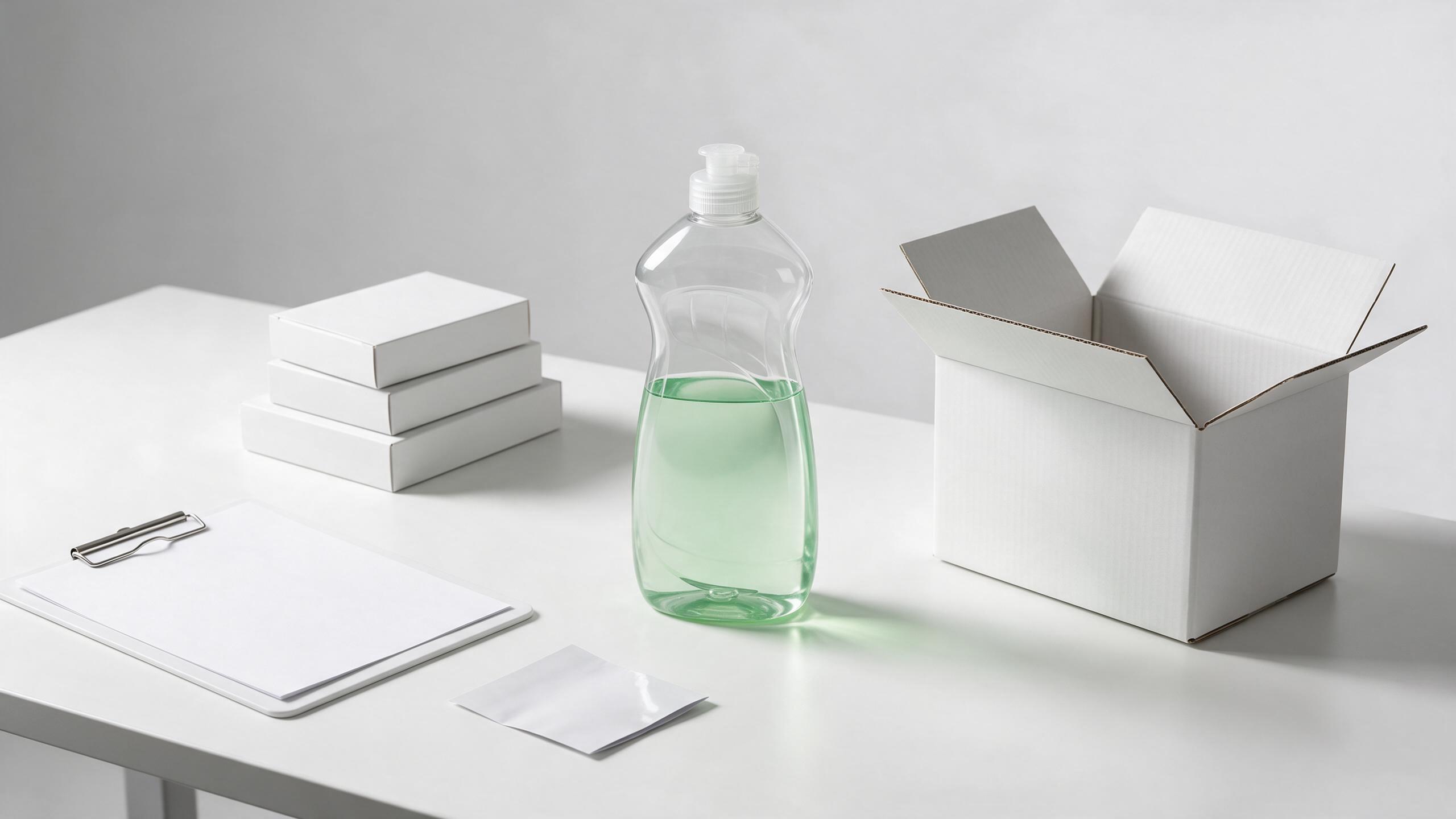
Use samples as a structured learning stage
A sample is useful only when its identity and review conditions are clear. For each Dishwashing Liquid sample, record the sample code, date received, storage information, pack configuration, and the version of the brief it is meant to address. Sampling and testing are different activities: receiving a sample creates an opportunity for evaluation, but it does not establish every quality or performance conclusion.
Give reviewers a concise evaluation sheet. Product teams may examine sensory and use experience under agreed conditions; packaging reviewers can inspect bottle handling, closure operation, label placement, and legibility; quality or regulatory reviewers can identify which documents or checks remain necessary. That record is more useful than declaring one sample suitable for every user. It is to capture observations, conditions, and open questions before the next revision.
| Review area | Question to record | Evidence or action |
|---|---|---|
| Product brief | Which requirements does this Dishwashing Liquid sample address? | Link to the current brief version. |
| Pack fit | Does the proposed bottle, closure, or refill format suit the intended use? | Record handling observations and packaging questions. |
| Label readiness | Which information is approved, pending, or market-specific? | Assign label and regulatory review owners. |
| Follow-up | What must change, be supplied, or be verified next? | Set an owner and revision date. |
Build the document handoff before production planning
Once a preferred Dishwashing Liquid direction emerges, the project should move from informal comments to a controlled handoff. Confirm the current brief, product proposal, packaging components, artwork status, sample identifiers, and the remaining documentation requests. Procurement and quality teams often need different information, so a shared checklist is more useful than a generic statement that everything has been approved.
Private-label projects also benefit from assigning who confirms each item. Brand owners may approve visual direction; quality teams may define the review scope; procurement may coordinate commercial and supply discussions; regulatory reviewers may assess the applicable market requirements. Making those roles visible keeps an email thread from becoming the only approval record.
A practical question set for brand teams
Before progressing a Dishwashing Liquid private-label program, ask: What consumer and market problem is the product meant to address? Which product and packaging details are requirements versus preferences? What sample version is being reviewed? Which claims need evidence or local approval? What documents, tests, or label reviews remain open? Who records final confirmation?
Shanghai Hutchison WhiteCat’s public site presents household-cleaning and dishwashing-detergent themes, which can be a useful starting point for a brand conversation. Availability, specifications, packaging choices, and supporting documents should still be confirmed for the specific project. That distinction keeps the discussion credible and gives every reviewer a clearer next step.
Move from interest to a reviewable project brief
A well-framed Dishwashing Liquid inquiry does not need to contain every answer on day one. It should make the unknowns visible. Start with the intended user, target market, product and pack direction, claim boundaries, and sample-review plan. Then maintain the record as the project develops. This turns a broad Dishwashing Liquid idea into a sequence of decisions that brand, procurement, quality, and packaging teams can review together.