
 EN
 AR
 CS
 DA
 NL
 FR
 DE
 EL
 HI
 IT
 JA
 KO
 NO
 PL
 PT
 RO
 RU
 ES
 SV
 TL
 ID
 SR
 UK
 VI
 HU
 TH
 TR
 MS
 GA
 CY
 HY
 AZ
 KA
 BN
 LO
 LA
 MN
 MY
 KK
 KY
How to compare liquid detergent formulas?
Two bottles may both promise clean clothes, yet their instructions, ingredients and cost per wash can be quite different. Comparing a liquid detergent starts with a narrower question: how well does it fit your fabrics, machine and usual loads? Read the directions first, then compare the formula and test each option under similar conditions. A longer ingredient list or thicker liquid does not by itself show how well a formula cleans.
Start with the wash, not the bottle
List your frequent loads: everyday cottons, sportswear, towels or delicate fabrics. Note the soil you encounter, your usual water temperature and whether your washer is a high-efficiency (HE) model. Check garment care labels before choosing a cycle. A liquid detergent that suits a warm towel wash may not be appropriate for a delicate cold cycle.
Next, read each liquid detergent label for permitted fabrics, machine compatibility and dose recommendations. If a product is marked for HE machines, follow both the washer manufacturer's directions and the detergent label. The amount of foam is not a reliable measure of cleaning: excess product can make rinsing more difficult, depending on the machine and water conditions.
Read ingredients by function
A liquid detergent is a mixture, so a single ingredient name rarely tells you how the whole formula will perform. Labels and manufacturer information can help identify broad ingredient groups, although the exact proportions may not be disclosed. Compare what each group is intended to do, and avoid treating a listed ingredient as a measured performance result.
Surfactants and builders
Surfactants help wet fabric and lift oily soil into the wash water. Different types can play different roles in a liquid detergent, and a blend is common. Builders or water-conditioning ingredients help the cleaning system work in mineral-rich water. Hard water contains calcium and magnesium, which can affect washing; a product's dose guidance may account for local water hardness.
Do not rank a liquid detergent solely by the first surfactant on a label. Ingredient names may be presented differently across markets, and a list alone usually does not reveal the interaction between ingredients or their effective amount in the wash. Ask the supplier for a current ingredient disclosure if a particular substance matters to you.
Enzymes and other additions
Enzymes target particular kinds of soil. For example, proteases act on protein-based stains, while amylases act on starch. Some enzyme systems help cleaning at lower wash temperatures, but the actual result depends on the formula, stain, time and cycle. A liquid detergent without an enzyme may still be suitable for loads that do not need that function.
Other additions can affect the look or scent of laundry, the stability of the formula, or product handling. Optical brighteners change how fabric reflects light; they are not a substitute for stain removal. Fragrance is a preference, not a measure of cleaning. Preservatives help keep water-containing products stable, but shoppers with known sensitivities should check the ingredient information provided for the specific liquid detergent.
Compare fragrance and fabric needs carefully
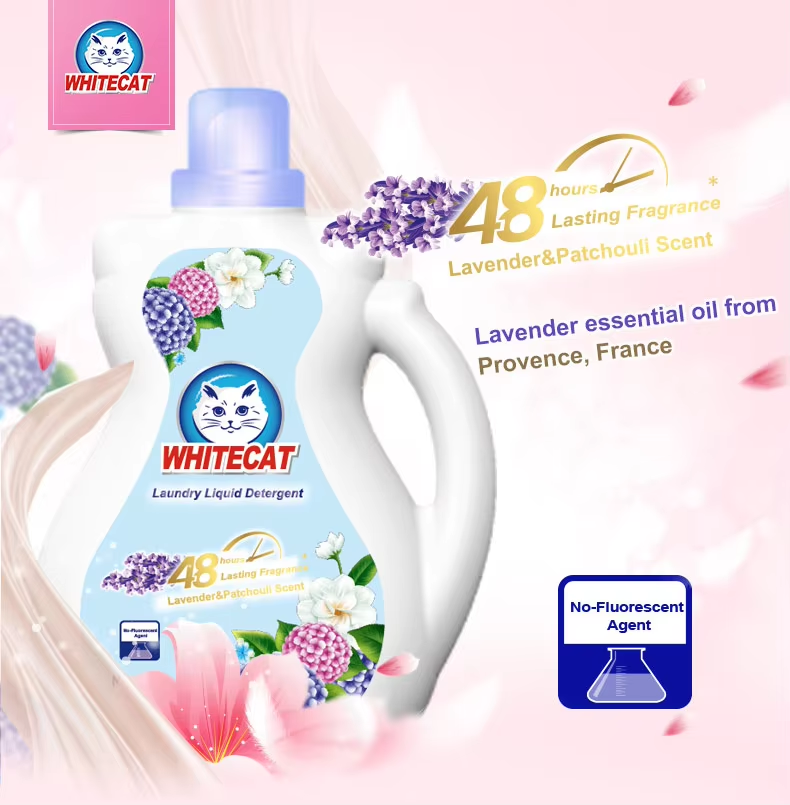
For a fragrance-sensitive household, check the wording rather than judging by smell alone. The U.S. Environmental Protection Agency's Safer Choice fragrance-free criteria exclude both added fragrance materials and masking scents. An “unscented” claim can have a different meaning. This does not mean every liquid detergent labeled fragrance-free has been reviewed under that program; verify any specific label claim separately.
Skin responses vary by person and may have several causes. If irritation is a concern, follow medical advice and review the product's ingredient information. Avoid making broad assumptions based on “gentle” or “hypoallergenic” on its own. For wool, silk, or special finishes, follow the fabric care label and the liquid detergent's stated use; some enzyme-containing formulas may not be appropriate for all delicate fibers.
Compare the real dose and cost per load
Concentrated liquid detergent can require a smaller volume per wash, but words such as “concentrated” do not provide a common measure of cleaning strength. Compare labeled doses for the same load size, soil level, machine and water hardness. Use each product's own cap markings or a suitable measuring tool; one capful is not necessarily the same volume across bottles.
For a simple cost comparison, divide the bottle price by the number of loads it provides at the dose you actually need. If the bottle lists total volume and dose in the same units, divide volume by dose to estimate loads, then divide price by that number. For example, a 1,000 mL bottle used at 25 mL per load gives an estimated 40 loads. A different liquid detergent may specify a different dose, so compare the resulting cost, not bottle price alone.
Include practical factors such as how easily the bottle pours, whether the cap markings are legible, and how it should be stored. For bulk purchases, ask for current packaging specifications and case quantities rather than assuming two liquid detergent products ship in equivalent formats.
Run a fair household comparison
A short trial can tell you more than a side-by-side ingredient list. Choose comparable loads and follow each liquid detergent's label rather than using an identical volume that may be inappropriate for one formula. Record the conditions so that a change in water temperature or load size is not mistaken for a difference in cleaning.
- Choose similar washable fabrics and comparable soil levels. Do not risk an important garment in a first test.
- Use the same machine, cycle and water temperature for each liquid detergent, within both labels' directions.
- Measure the recommended dose for each load. Record the volume and any pretreatment; avoid mixing cleaning products.
- After washing and drying according to the care label, compare visible soil, odor, fabric feel and any residue. Check that the rinse and dispenser are functioning properly.
- Repeat with another comparable load. If results differ, consider variation in stains, water and loading before attributing the difference to the formula.
This is a practical screening exercise, not a controlled laboratory test. If a liquid detergent leaves a visible mark, first check dose, dispenser cleanliness, load size and rinse settings. Follow the label and machine instructions before adjusting the process. Keep all laundry products in their original containers and out of reach of children and pets.
Questions to ask a supplier
For a purchasing decision, request the current ingredient disclosure, directions, safety information and a sample identified by formula or batch. Ask what fabrics, machines, water conditions and temperatures the liquid detergent is intended for. If a performance or environmental claim matters, request the underlying test method, its scope and any applicable independent verification.
Compare samples using the same agreed conditions and record the recommended dose for each liquid detergent. Ask how changes to fragrance, packaging or ingredients are communicated and which documents apply in your intended market. A technical sheet can clarify what is known; it should not be treated as proof of an untested claim.
To explore the site's broader range before requesting specific product information, visit Whitecat's detergent liquid collection. Choose a liquid detergent by matching disclosed information and a realistic trial to your priorities, rather than relying on one ingredient or a front-label slogan.