
 EN
 AR
 CS
 DA
 NL
 FR
 DE
 EL
 HI
 IT
 JA
 KO
 NO
 PL
 PT
 RO
 RU
 ES
 SV
 TL
 ID
 SR
 UK
 VI
 HU
 TH
 TR
 MS
 GA
 CY
 HY
 AZ
 KA
 BN
 LO
 LA
 MN
 MY
 KK
 KY
Why does oxygen bleach powder dosage matter?
Oxygen Bleach Powder dosage matters because the amount of product changes the concentration in the wash or soak. Too little may leave a stain looking much the same; too much can leave powder undissolved, waste product, and expose fabric to a stronger solution than the label intends. The practical starting point is not a universal scoop size. It is the directions on the particular package, together with the garment care label.
When reading a laundry label, consider the powder, the load and the machine as one system. A dose intended for a large machine wash is not necessarily suitable for a small hand soak. Concentration and other ingredients vary by formula, so a measure from one container should not be transferred to another.
What dosage changes in the wash
Some Oxygen Bleach Powder formulations contain sodium percarbonate, which releases hydrogen peroxide when dissolved in water. The resulting oxygen-based bleaching action can help with certain stains. A powder may also contain other ingredients, so its directions reflect the full formulation rather than one ingredient alone. Oxygen bleach is different from chlorine bleach, but that difference does not make it suitable for every fabric or every cleaning task.
With too little Oxygen Bleach Powder, the intended treatment may be less effective under the chosen conditions. With too much, there may be more material than the available water can readily dissolve or rinse out. A higher dose is not a reliable shortcut for an old stain, an overloaded drum, or a temperature outside the product's instructions. If a stain remains, check those conditions before changing the amount.
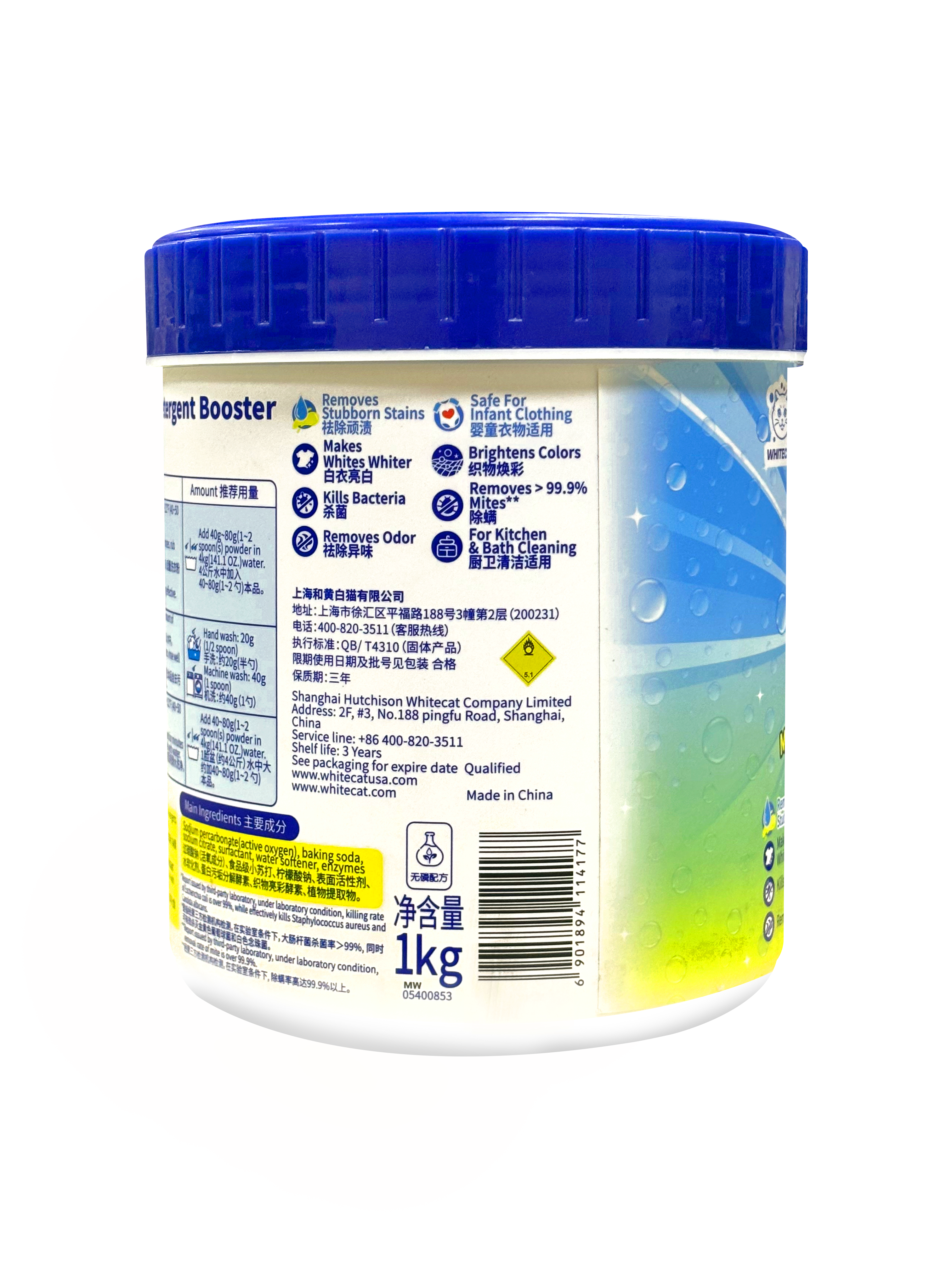
Start with the package, then look at the load
The directions for Oxygen Bleach Powder may give separate measurements for a routine wash, heavy soil and soaking. Find the section that matches the task instead of assuming all uses share one dose. Use the supplied measuring device only for the product it came with, and check where the manufacturer says to put the powder. Your machine's manual may also specify where laundry additives can be placed.
- Load size: Select the amount for the actual load, not the drum's maximum capacity. Leave enough room for items to move as recommended by the machine maker.
- Soil level: Use a higher label-listed amount only if the instructions allow it for heavier soil. Do not invent an extra-strong dose.
- Water and temperature: Choose a temperature allowed by both the powder instructions and the fabric label. Some powders dissolve less readily in cold water.
- Machine type: Check the powder label and appliance instructions for compatibility and dispenser placement, including high-efficiency machines.
Imagine two loads: a few lightly soiled cotton towels and a full drum of mixed everyday clothes. Even if both can be washed with the same Oxygen Bleach Powder, the applicable label directions may differ. The point of measuring is to match that specific task, not to treat every load as identical.
Why fabric care and color matter
Before measuring Oxygen Bleach Powder, check whether the garment permits non-chlorine bleach and whether the powder label permits that fabric. Some sodium percarbonate products exclude wool and silk. If either label prohibits the treatment, choose another method. For colored items, follow any colorfastness testing directions on the package in a hidden area; a favorable test is useful but cannot promise that every dye or trim will react the same way.
Pay attention to prints, coatings, elastic and decorative details as well as the main fabric. When the care instructions are missing or the item is valuable, pause and ask the garment maker or a qualified textile care professional rather than increasing the dose. A product described as suitable for colors is not automatically appropriate for all colored textiles.
Wash dose and soak dose are different decisions
A machine cycle and a separate soak involve different volumes of water and contact times. For a soak, follow the Oxygen Bleach Powder label's stated water volume, measure, temperature and maximum time. Do not assume that doubling a wash dose produces the right soak solution. If the label does not give a soak method, do not improvise one.
If the Oxygen Bleach Powder directions call for dissolving the powder first, follow them using the specified water conditions and a suitable open container. Avoid contact with eyes and skin and use any protective equipment listed on the label. Keep the container out of reach of children and pets. Do not seal or store a prepared solution; make and use it only as the product directs. Rinse or wash the item afterward as instructed.
How to troubleshoot a disappointing result
Before adding more Oxygen Bleach Powder, identify what actually happened. A stain that remains is a different problem from visible granules or a stiff-feeling item. Record the product and amount, load size, cycle, water temperature, fabric and whether the powder fully dissolved. That information gives you a clearer basis for the next attempt or a question to the manufacturer.
Visible powder or a chalky mark
Check that the amount and placement matched both the product and machine instructions. Cold water, overloading or a blocked dispenser may be relevant, but the mark alone does not establish the cause. Rinse or rewash according to the garment and product directions. If the issue recurs, stop using the product on that item and contact the manufacturer with the details.
The stain is still visible
Some stains respond differently depending on their source, age and the textile. Follow the stain-care and powder instructions; a permitted pre-treatment or repeat wash may be more appropriate than exceeding the dose. Check the item before machine drying, because heat can make some stains harder to remove. If the label does not support a further treatment, seek textile care advice.
Use and store the powder with care
Oxygen Bleach Powder is a cleaning product, not a food or a skin-care ingredient. Read the package warnings, avoid breathing dust, and keep the original container closed and dry according to its instructions. Do not mix it with other cleaning chemicals. Use it with laundry detergent only when and as the label directs; avoid combining it with chlorine bleach, acids, vinegar or ammonia. If exposure occurs, follow the first-aid instructions and contact a local poison information service or medical professional as appropriate.
Do not claim a measured scoop will disinfect laundry unless the specific product label authorizes that use and provides the relevant instructions. Ordinary stain removal and disinfection are different claims and may require different products or directions.
A short dosage checklist
- Read the Oxygen Bleach Powder label for the intended wash or soak and check the garment care label.
- Confirm fabric, color and machine compatibility before measuring.
- Use the product's stated amount, placement, water conditions and contact time for that task.
- Observe the result, then document conditions before changing anything within the label's permitted range.
Good dosage is a repeatable decision rather than a bigger scoop. For more context on the company's household and laundry care range, visit the Whitecat home page. For the amount to use today, return to the instructions on the container in your hand.