
 EN
 AR
 CS
 DA
 NL
 FR
 DE
 EL
 HI
 IT
 JA
 KO
 NO
 PL
 PT
 RO
 RU
 ES
 SV
 TL
 ID
 SR
 UK
 VI
 HU
 TH
 TR
 MS
 GA
 CY
 HY
 AZ
 KA
 BN
 LO
 LA
 MN
 MY
 KK
 KY
A family laundry basket rarely holds just one kind of problem. School clothes may be muddy, towels may feel stiff, and a favorite shirt may need a gentler cycle. A reliable routine starts with the fabric care label, the washer instructions, and the directions on your liquid laundry detergent. Together, those three sources help you decide what to wash, how much to use, and when a separate load makes sense.
This guide focuses on everyday household washing rather than a particular formula. Since products differ in concentration and ingredients, use the directions on your own bottle instead of assuming that one capful suits every machine.
Choose a formula for your household and washer
Start by checking whether the liquid laundry detergent is intended for your machine. High-efficiency washers usually call for an HE-labeled detergent. The American Cleaning Institute notes that HE detergents are designed for both front- and top-loading HE machines; follow your washer manual and the product label for the combination you own.
Next, think about the clothes and people in your home. Some households prefer a fragrance-free or dye-free option, while others choose a particular scent. Read the ingredient and care information rather than treating a label description as a promise that everyone will react the same way. If someone has ongoing skin irritation, seek advice from a qualified health professional.
Compare bottles using the recommended amount per load, not package size alone. A concentrated liquid laundry detergent may use a smaller dose than another product. The number of loads stated on a package depends on the manufacturer's dosing assumptions, so check whether they match the loads you usually wash.
Sort clothes before you measure
Separate garments by care instructions first, then by color, fabric weight and soil level. A dark new garment may need separate washing; light cottons and heavy towels may also benefit from different groups. Close zippers, empty pockets and turn printed garments inside out when their labels recommend it.
Keep delicate items apart from rough towels or heavily soiled work clothes. For an item with a special finish, wool, silk or other care restrictions, follow its label and use a product suited to that material. Do not assume a general-purpose liquid laundry detergent is appropriate for every fabric.
Leave enough room for clothes to move according to the washer manufacturer's instructions. A tightly packed drum can make washing and rinsing less consistent. If the load is unusually small or very dirty, look for the corresponding dosing directions on the bottle rather than guessing.
Measure for the load, not the cap
Read the dosing chart on your liquid laundry detergent and locate the correct measuring mark. The amount may vary with the load size, soil level, water hardness and machine type. Use the supplied measuring device when possible, and check the markings in good light: the top of a cap is not automatically the recommended fill line.
- Choose the load size and note how dirty the clothes are.
- Find the matching dose on the product label, including any water-hardness guidance.
- Add the measured liquid to the dispenser or the location specified by the washer and detergent instructions.
- Close the bottle and place it in secure storage before starting the cycle.
More liquid laundry detergent does not automatically give a better wash. Excess detergent can leave too many suds or residue, particularly when the load is small or the washer uses less water. If you see residue, review the dose and dispenser instructions before adding another product.
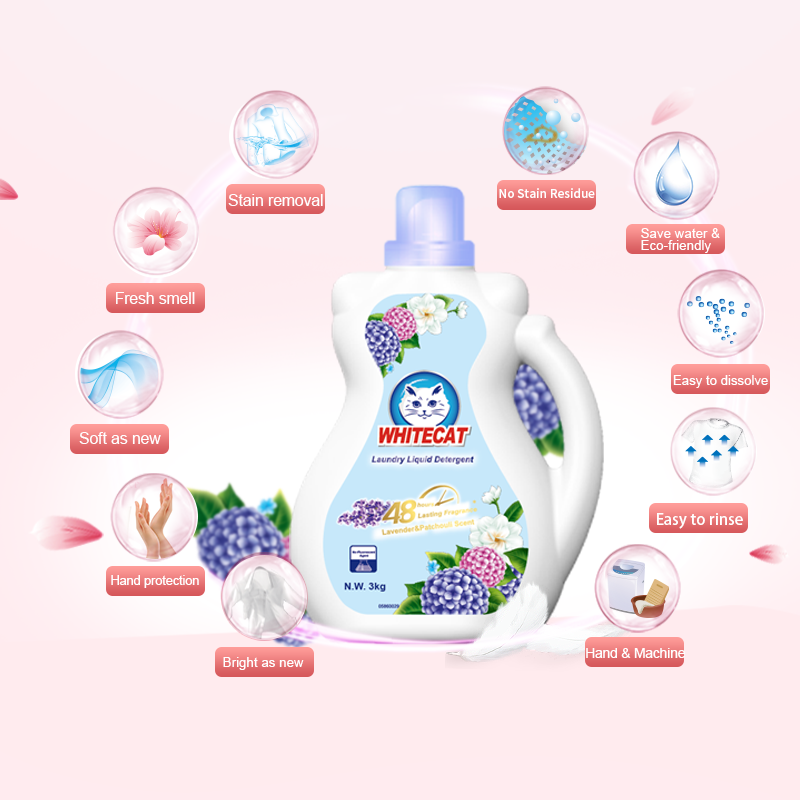
Set the cycle and water temperature
Use the garment care label to select the allowed temperature and cycle. For many everyday loads, a cooler setting is an option when the detergent and fabric labels permit it. The US Department of Energy's 2022 Energy Saver Guide notes that cold-water detergents can help with laundry energy use. Actual results depend on the machine, water supply, cycle and clothes.
Warmer water may be appropriate for some items or soil types if the care label allows it. Do not assume that a routine wash disinfects clothing; follow specific public-health or manufacturer guidance when disinfection is required. For a mixed load, let the most restrictive care instruction guide your decision, or separate the items.
Handle stains before the main wash
Check stained items before they go into the machine. Blot fresh spills rather than rubbing them deeper into fabric, and consult the garment label. If the liquid laundry detergent label permits pretreatment, test it on an inconspicuous area first and follow the stated instructions. Some garments need a specialist product or professional care instead.
Avoid mixing cleaning chemicals. In particular, do not mix bleach with ammonia or other cleaners. Follow each product's label and use the dispenser as directed. Once the cycle finishes, inspect the stained area before drying; heat can make some remaining stains harder to remove.
What to do when laundry feels or smells wrong
Change one thing at a time so you can see what helps. If clothing feels coated, check whether you measured the liquid laundry detergent correctly, whether the machine was overloaded and whether its dispenser is clean. Rinse according to the fabric and washer instructions, then try the next normal load with the label's recommended dose.
If a load smells musty, remove it promptly after the cycle and dry it as the care labels direct. Also check the washer's maintenance instructions for the drawer, seal and cleaning cycle. A smell can have several causes, so a single wash does not establish that the detergent itself is the problem.
For persistent marks or irritation, pause use of the suspected product and examine the relevant labels. Consider the condition of the fabric, any additional laundry products and recent changes to the routine. Seek appropriate professional advice for persistent skin symptoms.
Store laundry products safely
Keep liquid laundry detergent in its original container, with the cap closed, locked up and out of children's reach. Poison Help recommends storing potentially hazardous household products in their original containers and locked up and out of children's reach. Do not transfer detergent into a beverage bottle or leave a measuring cup where a child can reach it.
If exposure occurs, follow the product's first-aid instructions and contact your local poison center promptly. In the United States, Poison Help can be reached at 1-800-222-1222. If the person has collapsed, has a seizure, has trouble breathing or cannot be awakened, call emergency services immediately.
A repeatable routine for busy weeks
Keep the process simple: sort by care label, measure liquid laundry detergent for the actual load, select an appropriate cycle and check the results. A note near the washer with your machine's preferred dispenser and the label's dosing chart can help everyone in the household follow the same routine.
When you change detergent, reread the directions even if the bottle looks familiar. Concentration, measuring marks and intended machine type can differ. Shanghai Hutchison Whitecat's site covers household cleaning and laundry supplies; use specific product labels and care instructions to decide whether any individual option suits your needs.